Managed, Not Influenced: What the Ceiling of Skill Without Reputation Looks Like
Most content on influence in senior technical work treats it as a skill. Something learnable. The ability to read a room, frame a technical position in the language of the person receiving it, time an intervention correctly, manage the dynamics of a difficult conversation. These capabilities are real and they are necessary. The architect who cannot communicate their position clearly does not get heard regardless of how strong the underlying thinking is. The skill is worth developing and it pays returns relatively quickly.
But skill has a ceiling. And the ceiling is set by something that cannot be trained.
The architect who communicates well, reads the room correctly, times their interventions precisely, but has not built the reputational foundation underneath the skill, gets heard. They may get agreement in the room. But the agreement is surface level. The stakeholder who nods in the meeting and does something different the following week was managed, not influenced. The technical recommendation that was received positively and then quietly deprioritised was accommodated, not adopted. The architect whose positions are consistently met with polite engagement but rarely drive genuine change is experiencing the ceiling of skill without reputation.
Skill without reputation produces the performance of influence. Reputation with skill produces the reality of it.
Reputation in this context is not seniority, not title, not tenure. It is the accumulated consequence of a pattern of behaviour over time, observed by the people whose alignment actually determines whether the work lands. It is built slowly and cannot be accelerated. What it consists of is specific.
What Influence Actually Is
The first is being right, visibly and consistently. Not being right in private. Not being right occasionally. The pattern of calling the technical risk before the programme discovers it. The design decision that proves its value eighteen months after it was made. The assessment delivered to a steering committee that the committee did not want to hear and that was later shown to have been accurate. Each of these deposits into a reputational account. The account is what influence is drawn from. The uncomfortable observation for architects who believe the quality of their thinking should speak for itself is that it does not, not in large organisations. The thinking has to be placed where it can be seen by the people who matter.
The second is consistency under pressure. Every senior architect faces the moment where the position they hold becomes uncomfortable to hold. The room has moved. The senior stakeholder has signalled their preference. The political cost of continuing to hold the position is becoming visible. The architect who adjusts their view in that moment does not build influence. They build a reputation for being manageable, which is the precise opposite of influence. The distinction that matters is between updating a position because new information genuinely warrants it and updating a position because the room has become uncomfortable. The people in the room can read that distinction, even when they do not name it. Over time, the pattern of which kind of updating the architect does is one of the most powerful determinants of whether their view carries weight.
The third is holding the reasoning clean in the moments when pressure to corrupt it is highest. Every senior career contains moments where the accurate answer and the convenient answer are not the same thing. The programme that is in serious trouble but the stakeholders want to hear it is on track. The technical decision that is wrong but the person who made it has more seniority. The strategic direction that will not deliver what it is promising but the sponsor is publicly committed to it. What the architect says in those moments, and specifically whether what they say reflects accurate reasoning rather than reasoning that has been quietly bent toward the convenient conclusion, is one of the slowest but most durable builders of reputation. The moment of clean reasoning does not produce immediate influence. Sometimes it produces the opposite. But over time, the architect who can be trusted to say what the evidence actually supports rather than what the room wants to hear becomes the person whose view is sought when the situation is genuinely serious.
The fourth is the specific relationships that carry weight. Influence does not operate uniformly across an organisation. It operates through the specific people who have observed the pattern of behaviour over time and whose own standing means their orientation toward your view shapes how the wider room receives it. The CTO who has seen the architect be right three times over two years. The programme director who trusts the technical assessment because it has never been used to protect the architecture at the expense of the delivery. The business sponsor who knows the architect will name the risk even when nobody wants to hear it. These relationships are the channels through which influence operates. Without them, the reputation has nowhere to land.
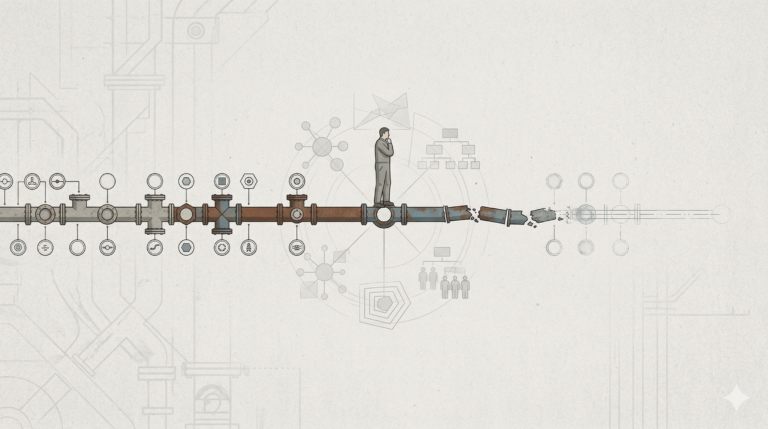
Skill is the mechanism through which the reputation is expressed. Without the skill, the reputation cannot be accessed. Without the reputation, the skill produces management rather than change. The two are not interchangeable. They are not alternatives. They are sequential. The skill comes first. The reputation takes longer. And genuine influence, the kind that drives outcomes rather than manages surfaces, requires both.
How It Accumulates
Reputation of the kind described above does not accumulate on a schedule. It accumulates when the conditions are right and does not when they are not. Understanding those conditions is not the same as being able to manufacture them. But the architect who does not understand them will spend years doing good work that does not land where it needs to.
The first condition is time. There is no fast version of this. The pattern of being right visibly and consistently, of holding positions under pressure, of keeping the reasoning clean when the pressure to bend it is highest, has to repeat across enough situations and in front of enough of the right people for the reputation to form. The techniques can be learned quickly. The reputation cannot.
The second condition is being present in the right conversations. Reputation accumulates through observation. The people whose view of you matters have to be in the room when the pattern is being demonstrated. There is a difference between the architect who arrives at meetings with a polished position already formed and the architect who is present in the messy conversations where positions are still being shaped, where the risk is being named before anyone is ready to name it, where the difficult question is asked before anyone else has asked it. The first demonstrates competence. The second is where reputation is built. The distinction is not about performing. It is about being in the moments that matter rather than only the moments that are safe.
This is the condition most architects underestimate. The belief that good work surfaces itself, that the quality of the thinking will eventually be recognised without having to be placed where it can be seen, is one of the most common reasons senior architects build less influence than their capability warrants. The work does not surface itself in large organisations. It has to be placed where the right people can see it, and that has to happen consistently enough over time to become a pattern.
The third condition is being able to sit with the discomfort. Building reputation requires doing the thing that does not pay off immediately, repeatedly. Holding the position when the room has moved costs something in the moment. Keeping the reasoning clean when the convenient conclusion is right there costs something in the moment. Being present in the difficult conversations rather than the safe ones costs something in the moment. None of these produce an immediate return. The architect who needs validation from each individual act of consistency will not sustain it long enough for the reputation to build. The discomfort is not a phase. It is the persistent condition of the work.
The fourth condition is coherence across the pattern. Reputation is not built by individual moments of good judgment. It is built by the accumulated reading of a consistent pattern across many situations over time. The architect who holds a position brilliantly in one meeting and adjusts it for political reasons in the next has not built half a reputation. They have introduced noise that makes the pattern harder to read and therefore harder to act on. What allows the people around you to orient toward your view before you have spoken is that they have read the pattern clearly enough to trust it. That orientation is what influence feels like from the outside.
Influence is not the objective. It is the consequence of doing the work honestly and consistently, and accepting that is what accumulates when you do.
What Destroys It
Influence built over years can be lost faster than it was built. The asymmetry matters. Most content on influence describes how to build it. Almost none describes how it is lost, which is the more useful knowledge for anyone who has spent years accumulating it.
Four things destroy it quickly in senior technical work.
Being visibly wrong on something significant.
Everyone is wrong sometimes. Being wrong does not destroy influence. Being wrong visibly, on something significant, in a way that suggests the previous pattern of being right was luck rather than judgment, does. The distinction is between an error that updates the room’s view of a specific position and an error that updates their view of your judgment overall. The second is the one that costs.
The practical consequence is that the architect with accumulated influence has more to lose from overreach than from caution. The confident position taken outside the genuine boundary of what you actually know is the highest-risk position you can take. The confidence is read against the reputation. When it fails, it fails harder.
Adjusting positions for political reasons.
This is the most common mechanism and the most corrosive because it happens slowly and is often invisible while it is happening. The room does not always see each individual adjustment. What it sees over time is the direction of the adjustments. If the positions consistently move toward whatever the most senior person in the room prefers, if the technical assessment consistently lands on the politically safe side, if the view expressed one to one is consistently softer than the view expressed among peers, the pattern becomes readable. The reputation for independent judgment starts to erode.
This connects directly to reasoning corruption. The architect who adjusts for political reasons rarely experiences it as adjusting. They experience it as being pragmatic, reading the situation, understanding what is achievable. That internal narrative is what makes it difficult to interrupt. The honest question is whether the updated position reflects new information or the pressure of the room. The room will eventually form its own answer to that question regardless of what you believe about it.
Using influence to protect the domain rather than serve the outcome.
Influence accumulates because the people around you read your positions as being in service of the work. The moment the room starts reading your positions as being in service of your own territory, that dynamic changes.
The technical positions that consistently land in favour of architectural complexity, of expanding the architecture function’s involvement, of protecting previous decisions regardless of whether they still serve the current situation, are eventually read not as independent judgment but as domain protection. When that reading takes hold, the influence does not disappear immediately. It gets rerouted. The organisation finds ways to make the decisions it needs to make without running them through the channel that will produce the domain-protective response. The architect who was once sought out for their view is now being managed around. That transition is slow enough that it is easy to miss while it is happening.
Becoming invisible.
Influence requires continued presence in the conversations where decisions are actually made. Not the governance forums where decisions are ratified. The conversations where positions are formed, risks are named, and directions are set before they are announced.
The architect who withdraws from those conversations finds that what they built through years of presence dissipates faster than expected. The conversations continue without them. Other views fill the space. The room moves on. Returning after a period of absence to find the view carrying less weight than it did is not a personal slight. It is the consequence of how influence actually works.
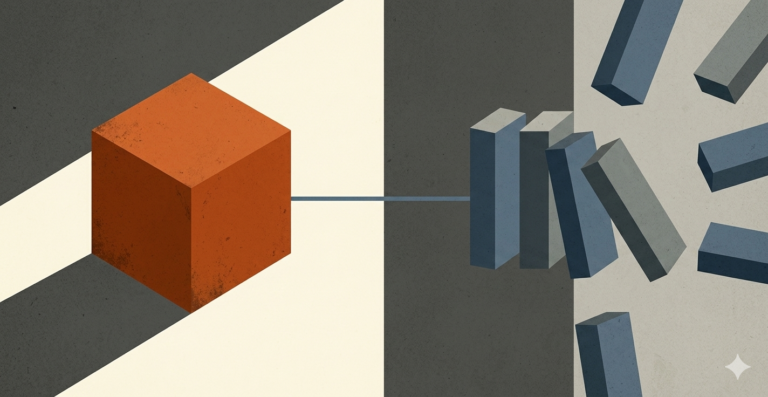
The four mechanisms share a common thread. Each one interrupts the pattern the reputation was built on. Being wrong interrupts the pattern of accurate judgment. Adjusting for political reasons interrupts the pattern of independent assessment. Protecting the domain interrupts the pattern of serving the outcome. Becoming invisible interrupts the pattern of presence. The reputation is the pattern. Interrupt it long enough and the influence goes with it.
Closing
Influence in senior technical work is not a leadership competency. It cannot be developed through a programme, measured in a review, or accelerated by technique alone. The skill matters and without it the reputation has no way of being expressed. But the skill is the smaller part of the equation and the part that gets almost all of the attention.
What sits underneath the skill is built in the unremarkable moments as much as the visible ones. In the meeting where the position was held when the room moved. In the conversation where the reasoning stayed clean when it would have been easier to let it bend. In the years of being present in the difficult conversations rather than only the safe ones. None of those moments felt like building influence at the time. They rarely do.
The architects who carry the most weight in large organisations are not always the most skilled communicators in the room. They are the ones whose pattern of behaviour over time has made their view worth something before they have opened their mouth. That pattern is not designed. It is the residue of doing the work honestly for long enough that the people who matter have had enough opportunity to read it.
Influence is what that residue is called.